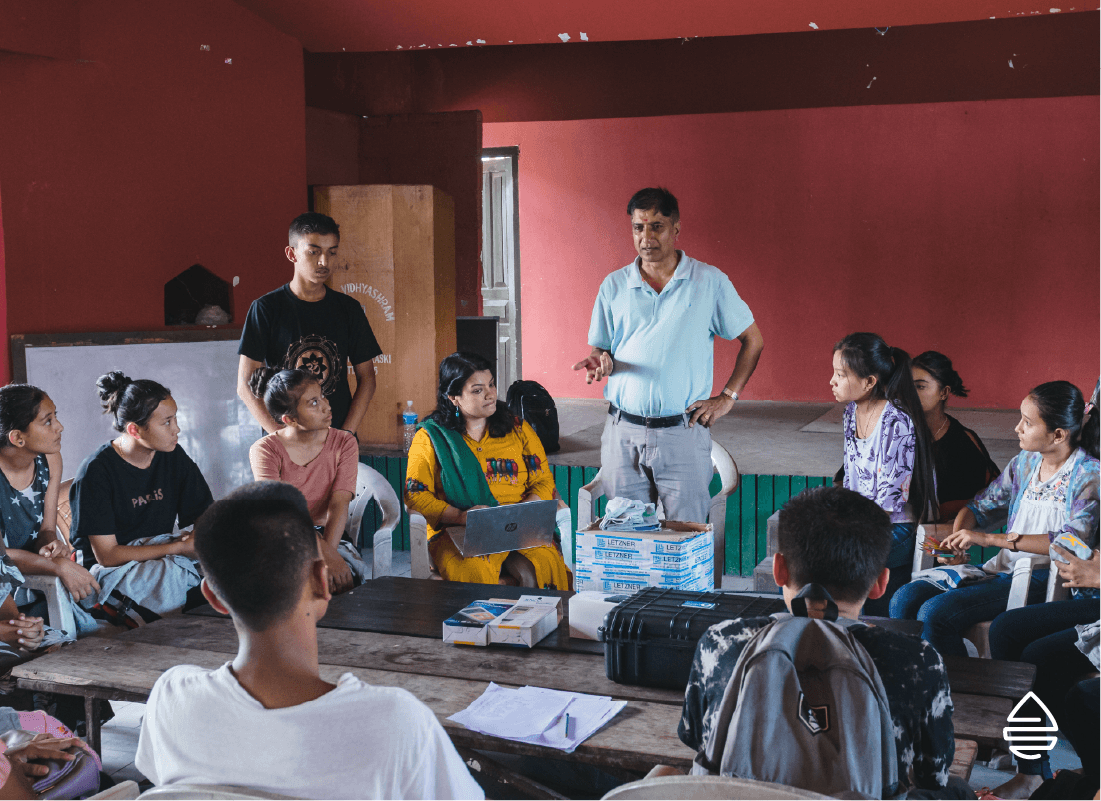
In an era where smartphones are ubiquitous even in remote Nepali villages, the question isn't whether technology can help solve water challenges—it's how to harness it effectively. The drinkPani platform demonstrates that appropriate technology, thoughtfully designed, can transform water management from the ground up.
The Technology Stack Behind drinkPani
Our approach combines simplicity with power. The mobile application, available on Android devices common in Nepal, allows Young Water Volunteers to:
- Record GPS coordinates of water sources automatically
- Photograph water testing procedures and results
- Input test parameters using intuitive interfaces
- Upload data seamlessly when connectivity is available
- Access historical data to identify trends
On the backend, we use cloud infrastructure that scales affordably. Real-time dashboards give water utilities immediate visibility into supply scheme performance across multiple locations. Automated alerts flag potential issues before they become crises.
Why ICT is Essential, Not Optional
Information and Communication Technologies (ICTs) aren't just nice-to-have tools—they're essential infrastructure for modern water management. Here's why:
Scale: A single utility manager can't physically check dozens of water sources daily. But a network of trained volunteers with mobile apps can provide comprehensive, continuous monitoring.
Speed: Traditional lab testing takes days. By the time results arrive, contaminated water may have already caused illness. On-site testing with immediate digital reporting enables rapid response.
Transparency: When water quality data sits on a server accessible only to officials, communities remain in the dark. When that same data is published openly on the drinkPani platform, it becomes a tool for accountability.
Cost-Effectiveness: Establishing traditional monitoring infrastructure is expensive. Leveraging existing mobile technology and training motivated youth volunteers dramatically reduces costs while increasing coverage.
Overcoming Digital Divide Challenges
Nepal's digital landscape presents unique challenges. Internet connectivity can be unreliable. Not all students have personal smartphones. Digital literacy varies widely.
Our solutions are pragmatic:
- The app works offline, storing data locally until connectivity is restored
- Water Clubs share devices among members
- Training emphasizes hands-on practice, not just theory
- The interface uses visual cues and minimizes text where possible
- Data visualization emphasizes graphs and maps over tables
From Data to Decisions
Technology alone doesn't solve problems—informed decisions do. The drinkPani platform bridges data collection and decision-making through:
Interactive Dashboards that help utility managers identify patterns, compare supply schemes, and allocate resources efficiently
Community Reports generated automatically, translating technical data into language residents understand
Trend Analysis that reveals seasonal patterns, long-term changes, and early warning signs of problems
GIS Mapping that visualizes water quality geographically, making spatial patterns immediately apparent
The Human Element in Digital Systems
While we leverage technology extensively, the drinkPani approach never loses sight of the human element. Technology serves people, not the reverse.
Young Water Volunteers aren't just data collectors—they're interpreters, communicators, and advocates. They use technology as a tool for civic engagement. When a student shows a community member the water quality data from their neighborhood on a smartphone screen, technology becomes a medium for dialogue and empowerment.
Scaling Digital Water Solutions
The architecture we've built is designed for scale. Adding new water sources, volunteers, or entire municipalities requires minimal marginal cost. The same system that works in Pokhara can work in any Nepali city—or beyond.
Open standards, API integrations, and modular design mean the platform can evolve. Today it monitors basic water quality parameters. Tomorrow it might integrate with IoT sensors, satellite data, or machine learning models for predictive analytics.
The Future is Digital—and Inclusive
The drinkPani platform demonstrates that digital water management needn't be complex, expensive, or exclusive. With thoughtful design, appropriate technology, and a focus on empowering users rather than impressing them, digital tools can democratize access to information and catalyze positive change.
As Nepal and other developing nations build their digital futures, water management must be part of that transformation. The tools exist. The opportunity is now.